May 7, 2026
Download Infographic Here
We talk a lot about collaboration in public health, health systems, and social care. We emphasise partnership. We prioritise alignment. We aim to get “everyone on the same page.”
But here’s the uncomfortable truth:
Not all collaboration leads to better outcomes.
Sometimes, it simply reinforces what we already believe.
In complex systems, agreement is often mistaken for effectiveness.
But ease is not the same as quality. And consensus, on its own, is not the same as progress. When everyone is aligned too quickly, one question is often left unasked:
What are we missing?
The most valuable people in my work are not the ones who agree with me. They are the ones who challenge me. Who question assumptions. Who see what I cannot see and are willing to say it.
Not to disrupt for the sake of it. But to strengthen the outcome.
This is key, because better decisions are rarely built in environments where thinking goes untested.
They are built where ideas are stretched, interrogated, and, at times, uncomfortable.
In public health and social care, the cost of unchallenged thinking is not theoretical.
It shows up in:
We say we value lived experience.
But do we create space for it to challenge us or just to validate what has already been decided?
There is a difference, and that difference shapes outcomes.
There is a tendency to avoid challenge because it feels uncomfortable. It can slow things down. It can create tension. It can disrupt the sense of cohesion we try to maintain.
But avoiding challenge doesn’t remove risk. It relocates it into the outcomes we deliver.
Real leadership is not about protecting agreement. It is about creating the conditions where challenge can happen constructively, respectfully, and purposefully.
Where people can say:
And know that saying it will strengthen the work, not undermine their place in the room.
If we are serious about improving outcomes, we have to move beyond surface-level collaboration.
We have to design systems, teams, and spaces that:
Better outcomes are not created through one-way thinking. They are created through friction. Through reflection. Through the willingness to see what we would otherwise miss.
So, I don’t need agreement. I need people who will challenge my blind spots. Because that’s how better outcomes are created.
Not through alignment alone, but through the courage to question, to challenge, and to think differently.
Stop, Pause and Reflect...
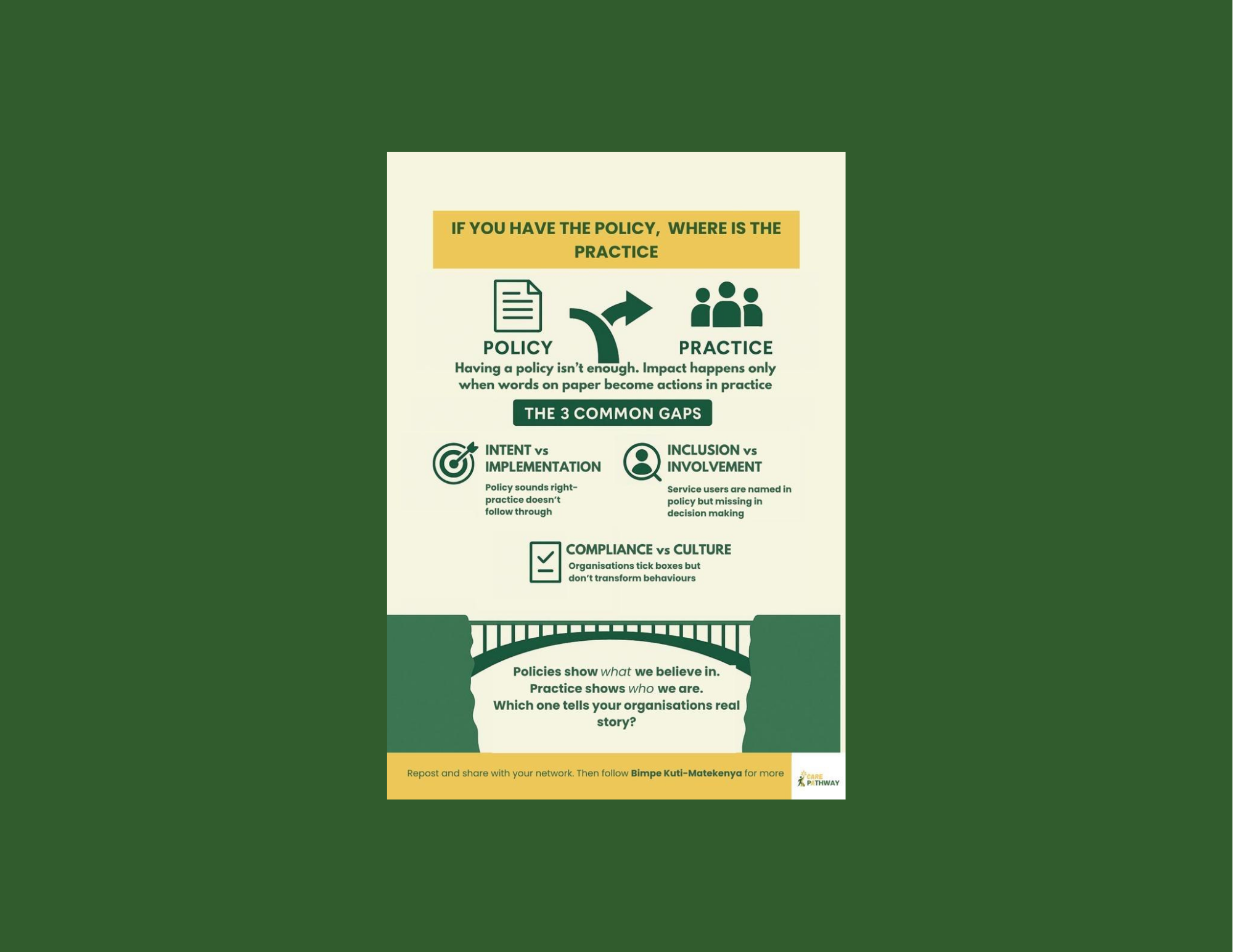
The infographic below captures the core message of this month's Newsletter.
Download it, share and reflect on it with your teams, networks and peers.
I would love to hear your reflections.
.png)